
A rule of thumb that sums it all up
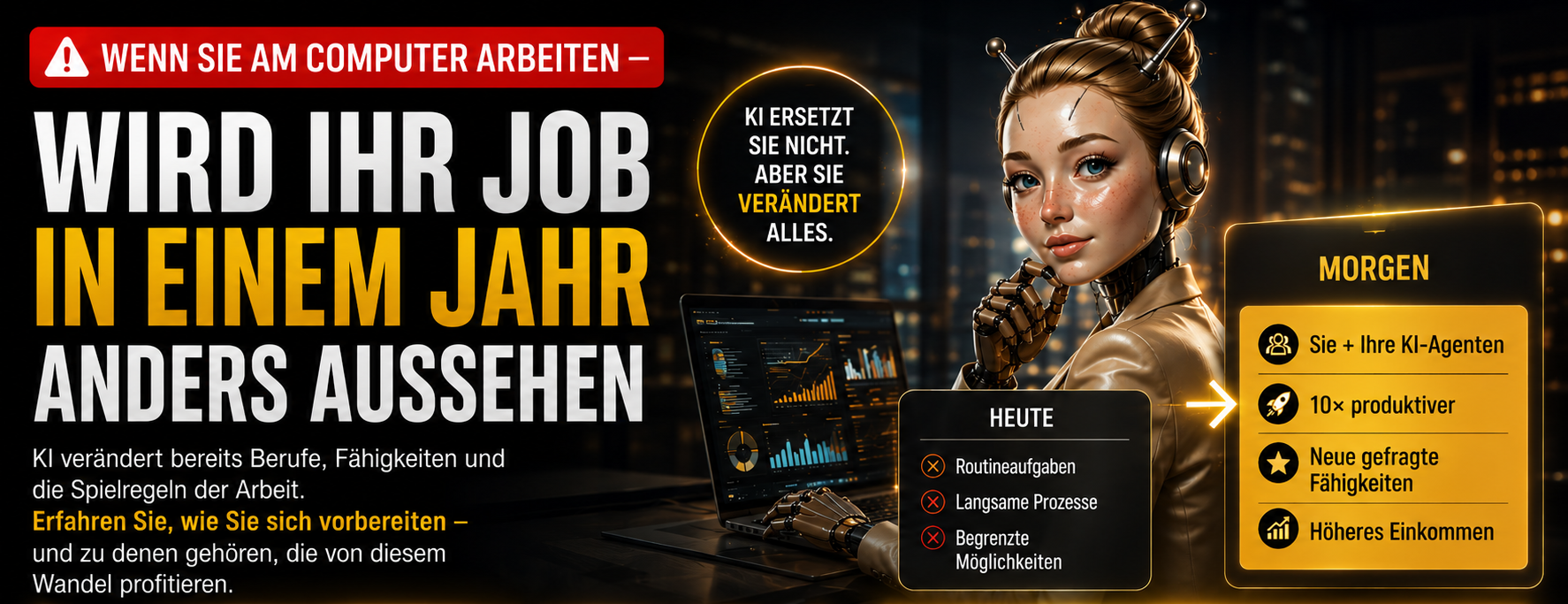
If your work involves sitting at a computer, staring at a screen and typing on a keyboard – your job will look different in a year's time. This is not a threat. Nor is it a prediction from a crystal ball. This is the sober observation of professionals who have been using AI tools in practice for years. What's important here is that it's not about AI replacing you. Two years ago, programmers were predicted to be the first to be replaced. They are all still here. But their tasks, their productivity benchmarks, and the form of their work have changed. This is precisely what is happening right now in almost every office job.The Model of the Future: You plus Your Agents
There is a term that best describes today's most productive people: One Man Team — a team consisting of you and your AI agents. When someone like this starts at a company, they don't come alone. They bring their team with them. And this team accelerates them by a factor of 10. Important: An AI agent is not like Photoshop or Excel. It's more like a full-fledged employee. And that means: you have to train them. Just like a human colleague.At first, we're both helpless. I don't know how to work with him. He doesn't know how to work with me. We agree on something, he forgets it, we learn how to make sure he doesn't forget anything… Today, I just tell him: 'A new podcast has been released, give me a summary.' And he understands by himself which podcast it is and where the summary needs to go. Several months of onboarding were necessary — but now he takes tons of routine off my hands.
The typical beginner mistake: no onboarding. That is, not giving the AI tool enough context. "Out of the box" AI works mediocrely. The more personal information it receives, the more effective it becomes.
A tangible guide: How do I understand how my job is changing?
Here is a simple algorithm for anyone who wants to find out how their profession will change under the influence of AI. This method works for any brainstorming with AI — you just change the context.- Step 1: Pay for an LLM
Free versions are massively restrictive. For around 20 euros a month, you get a fundamentally different tool. - Step 2: Give the AI context about yourself
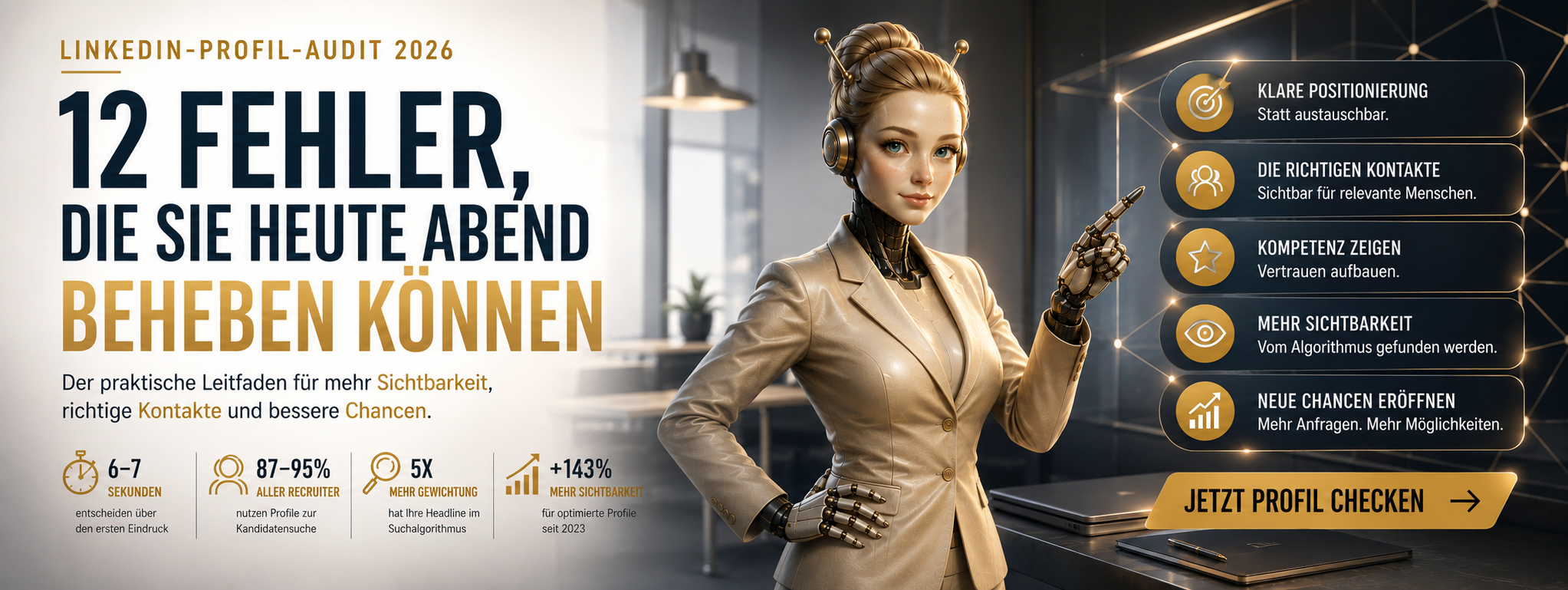
The more, the better. Who you are, what you do, how old you are, what market you work in. Give them your CV. Give them your LinkedIn profile. Store all of this in a project so you don't have to repeat it for every request. - Step 3: Honestly ask the question that is really on your mind
For example: "I'm worried about how my profession will change over the next two years. Let's think together about exactly what changes are coming and what I can do to be prepared and become a leader in these changes."
👉 Important: Activate the strongest available model with Extended Thinking mode. Add at the end of the request: “Ask me as many follow-up questions as necessary and wait until I have answered them. Then we will continue to think together.”
After a few iterations — where you answer the AI's questions — you'll get truly useful ideas.
What if the company blocks AI?
This is where it gets tricky. Some companies are already exclusively looking for candidates with AI skills. Others — particularly in conservative sectors like finance or healthcare — are blocking AI tools completely. Examples from practice: "Copilot is available here, but you have to apply for permission. Claude isn't accessible at all — IT security hasn't approved it." This is known as the "Faraday cage" policy. But here's the important observation:The most successful examples of AI adoption in business have always come from the bottom up. Employees started using AI themselves, and then permission came from above. Top-down implementation – “We’ve paid for your subscription, now use it” – fails in most cases.
Practical advice: Automate your workflows on your own initiative. Even conservative companies understand the value of employees who work faster and can optimise their processes.
If AI at work is absolutely taboo: Do pet projects in your free time. That's exactly what we'll get to now.
So hebst du KI-Kenntnisse in deinem Lebenslauf hervor:
That depends on where you are applying:- AI-first companies: Clearly highlight AI skills — even if you haven't used them professionally. Mention them at the top of your profile. Create a separate "AI Projects" section after the current work experience section.
- Conservative industries A brief mention in the skills section will suffice.
Examples of worthwhile pet projects
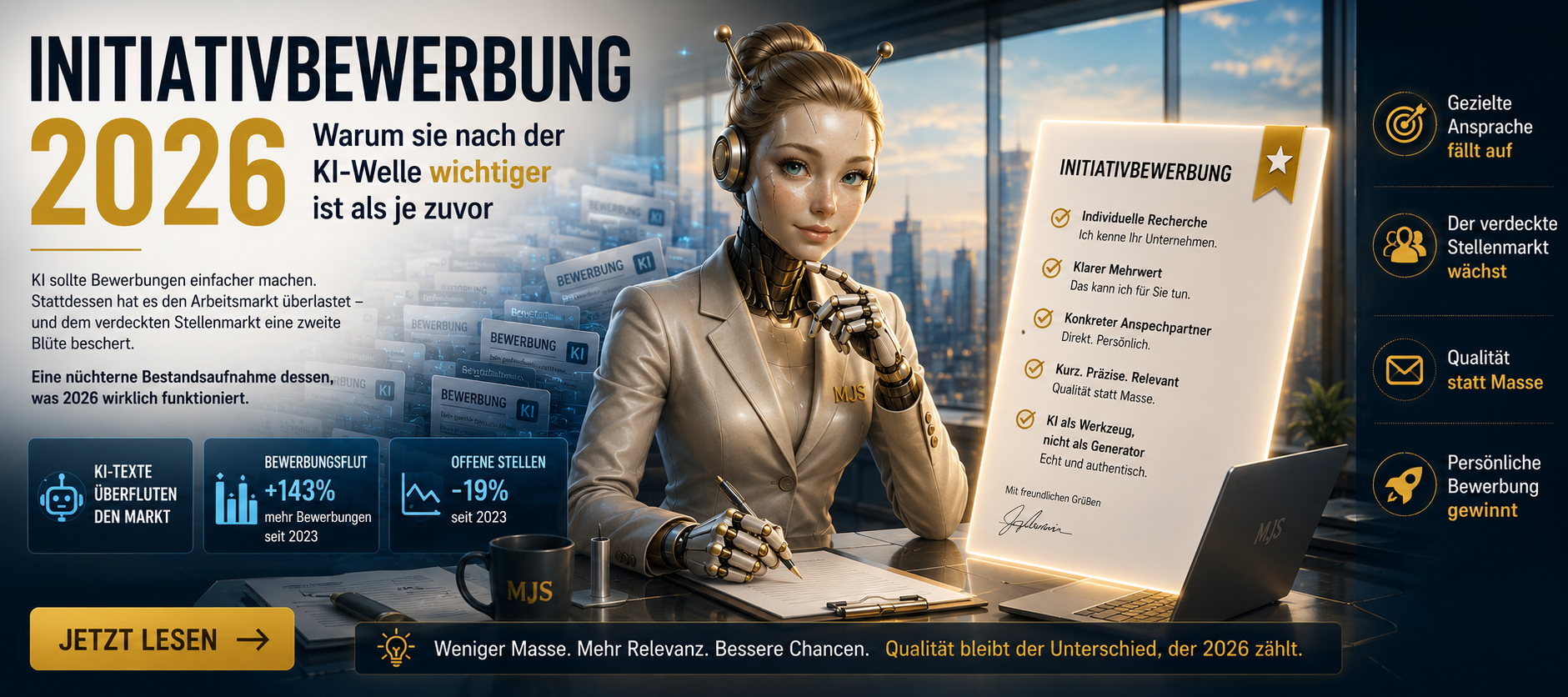
- An automated job search system that researches companies, assesses their relevance, and semi-automatically customises CVs and cover letters
- A shared context system for a team, so that each employee works with their AI assistant — and all assistants know the same things about the company
- A system that analyses all of an author's posts on one platform and helps to create content with the same tonality on other platforms.
Es gibt keine harte Grenze dafür, was delegiert werden kann, aber hier sind einige Fähigkeiten, die man NICHT oder nur sehr schwer an KI delegieren kann: * **Echte menschliche Empathie und emotionale Intelligenz:** KI kann Muster im menschlichen Verhalten erkennen und simulieren, aber sie kann keine echten Emotionen empfinden oder tiefes Mitgefühl für andere haben. Dinge wie Trost spenden, wirklich auf jemanden eingehen oder eine tiefe persönliche Verbindung aufbauen, sind für KI schwer zu replizieren. * **Kreativität und originelle Ideenfindung:** Während KI Kunst und Musik erzeugen und sogar neue Designs entwerfen kann, basiert dies oft auf der Analyse vorhandener Daten. Echte originelle, bahnbrechende Ideen oder künstlerische Ausdrücke, die aus persönlicher Erfahrung und tiefer Einsicht entstehen, sind bisher menschlich geblieben. * **Komplexes ethisches Urteilsvermögen und Moral:** KI kann Regeln folgen, aber komplexe ethische Dilemmata, die Grauzonen, widersprüchliche Werte und tiefgreifende moralische Überlegungen beinhalten, erfordern menschliches Urteilsvermögen und ein Bewusstsein für gesellschaftliche Normen und Werte. * **Kritisches Denken und gesunder Menschenverstand (in seiner tiefsten Form):** KI kann riesige Datenmengen analysieren und Schlussfolgerungen ziehen. Aber der menschliche gesunde Menschenverstand, der auf einer Fülle von unausgesprochenem Wissen und Lebenserfahrung basiert, ist schwer zu kodieren. Dies gilt insbesondere für Situationen, die völlig neu oder unvorhergesehen sind. * **Strategische Entscheidungsfindung mit hoher Unsicherheit und menschlichen Faktoren:** KI kann bei strategischen Entscheidungen unterstützen, indem sie Daten analysiert und Szenarien durchspielt. Aber die endgültige Entscheidung, die oft Risiken, menschliche Bedürfnisse, politische Realitäten und unvorhersehbare Ereignisse berücksichtigt, erfordert menschliche Weisheit und Weitsicht. * **Führen und Motivieren von Menschen:** Echte Führung erfordert Inspiration, Vision, Empathie und die Fähigkeit, Vertrauen aufzubauen. KI kann dabei unterstützen, indem sie Daten liefert oder Prozesse automatisiert, aber die zwischenmenschliche Dynamik der Führung ist schwer zu delegieren. * **Persönliche Verantwortung und Rechenschaftspflicht:** Letztendlich muss jemand die Verantwortung für die Entscheidungen und Handlungen tragen. KI kann keine echte Verantwortung übernehmen. Es ist wichtig zu beachten, dass sich die KI rasant entwickelt und die Grenzen dessen, was sie leisten kann, ständig verschieben. Viele dieser Fähigkeiten werden wahrscheinlich in Zukunft durch KI unterstützt oder sogar teilweise automatisiert werden, aber die Kernkompetenz und letztendliche Verantwortung bleiben oft beim Menschen.
These skills are becoming the "hard currency" – and should be highlighted on every CV. First: Delivering results with people. A few years ago, managers were prepared to hire a difficult candidate because of their technical strengths. Today, soft skills and negotiation ability are becoming more important. Secondly: Experience and judgement. You can have as many AI agents as you like do as much work as you like — but the decision whether to accept the outcome or not rests with the human. Because the human bears the responsibility.Judgment is a direct function of your experience. If you really know something, if you can tell the difference between a good solution and a bad one – that's a super skill. You have to train that.
Thirdly: Leadership and task assignment. This is new – and it affects everyone.
In 2026, we will all be switchers. Besides our actual profession, we will all become managers of our AI agents.
AI writes better code today than most programmers – but only if the task is formulated correctly: with a clear description of the desired outcome and an understanding of how to check if the outcome has been achieved.
In other words: AI raises the bar. If you are mid-level, senior-level will be expected of you. You will have to guide your AI agent as you would guide your own junior: clear tasks, clear success criteria.
What should junior employees do?
Regarding juniors. Traditionally, career starters relied on repetition: they performed simple, monotonous tasks and learned how more complex work functions. This path no longer exists. AI today does what used to be junior tasks.The practical advice: Juniors should learn to master AI and aim directly for mid-level.
If you've set up your own AI junior to handle monotonous tasks for you, you're already on another level.
How to learn not to fear AI
Spend time with people who are already using AI It's very easy to fall into a circle of dull sceptics who constantly say, "This bubble will burst, then we'll see… They want to replace us? Just look at how many files there are here – who's going to replace us?" Such conversations give you a sense of superiority (because only you know it's all just hype) and – more dangerously – a false sense of security. This cynicism is destructive. In a few years, you risk being hopelessly left behind. Allow yourself to experiment — and to fail Don't take your AI projects too seriously at first: "I'm going to build an app now and sell it for billions." This seriousness will only slow you down. Start with something simple – something that personally interests you.Remember how you used to play as a child? In childhood, we do many things simply 'for fun.' For example, why skateboard? What is that skill good for later in life? For nothing. It's just fun. This attitude helps me enormously today. I don't do pet projects to earn money or speak at a conference. I do them because I want to. That's how you learn incredibly quickly.
The biggest obstacle: people limit themselves. When they hear the words "Open Claude Code...", someone immediately switches off and says, "Code? But I'm not a programmer."
No one expects you to become the best developer in the world. To get started, the knowledge you already have is enough. You'll learn the rest through trial and error.
The downside: AI brain-fry and FOMO
But not everything about AI is optimistic. There's a paradox: AI agents increase productivity — but don't make work easier. Previously, a workday was structured like this: demanding tasks alternated with routine — and the brain recovered during the routine. Today, you can delegate the routine to AI — and immediately dedicate yourself to the next project. There's no room for recovery. The result is called AI Brain Fry in English-speaking regions — chronic cognitive overload.When you work with AI, you get dopamine from quick results. What used to take a week is now done in a few hours! The reward system in the brain says: ‘You’re great, let’s keep going. We can achieve so much more!’ And then you continue working in the time that has been freed up.
On top of that comes FOMO – the fear of missing out. "So much is happening at once – how am I supposed to keep up?" Everyone who is actively integrating AI into their work knows this feeling.
How to survive the AI pace?
Focus on a niche One of the main causes of FOMO: the feeling that you have to try everything at once. Choose an area that genuinely interests you and focus on it. Apply what you learn immediately.When a new video generation tool comes out, I say: 'Sounds cool, but that's not for me.' On the other hand, when a tool comes out that's thematically relevant to me, I'm one of the first to try it. I invest my attention in a narrow field.
Don't keep changing tools.
If you start with a tool, work with it for at least a month. Constantly switching between environments broadens the horizon but leaves only superficial understanding. A month is enough to push the tool's limits, recognise best practices and develop your own working patterns.
Rest
Real days off are not laziness – they are necessary. Additionally, a system with clear deadlines helps: after a certain work period, you get together for a review.
I agree with myself that I will work in active mode until a certain date – and then I will sit down at the negotiating table with myself and clarify: Where have we landed? Was it worth it? What should I focus on next? This is how I develop a new contract with myself.
What tools – and for what?
A tried-and-tested division in practice:- Images and logos A fast image generation tool. Fast generation, many variants at once.
- Complex multi-factor questions A model with a large context window – for legal and medical questions, where many variables need to be considered simultaneously.
- General Main Partner A conversational model for everything else. Tasks are posed as if to a business partner.
- Context store A note-taking tool like Obsidian, where you and your AI agents can collaborate.
👉 Practical tip: Test new tasks on multiple models simultaneously. Give the same task to two different models and compare the results.
Conclusion: There is no panic — but there is urgency
The core message can be reduced to three sentences: AI will not replace you. But someone who uses AI better than you, will.The skills that truly matter are no longer purely technical – it's judgment, task delegation, communication. Precisely what AI cannot do.
And the simplest first step? Pay for an LLM. Give it context about yourself. Ask an honest question. The rest will take care of itself.
No one expects you to be an AI genius tomorrow. But anyone who is in the same job in a year's time as they are today – and doing it in the same way – will likely run into trouble.
Editorial note:This article is based on an expert discussion about the practical integration of AI into daily professional life. The recommendations and observations presented reflect the experiences of experienced AI users.
 Deutsch
  Deutsch (Österreich)
  Deutsch (Schweiz)
  English (Australia)
  English (Canada)
  English
  English (UK)
  हिन्दी
  العربية
  Türkçe