

The uncomfortable question: are you a "human-machine interface"?
There's a question that has been changing the mood in many data teams over the last few months. It's as simple as it is stark: If the business orders a metric — you take the request, write an SQL statement, and return the number. What intellectual contribution have you made? The answer is: none. You were a translator between a business question and a programming language. An experienced data director puts it bluntly:If that's all you're doing, I'm sorry. You should seriously reflect on your future.
This isn't cynical. It's the sober observation of someone who is currently running an experiment within their organisation: AI agents versus live analysts. And the outcome will surprise you.
The test that changed everything
A concrete business task: pricing for warehouses. The peculiarity of this task has a catch: if a warehouse is 50 percent occupied, every additional sale is practically pure profit. The warehouse is there anyway. But if the warehouse is 100 percent full, prices must be increased. In other words, the most important thing you need to find out first is the occupancy rate. Everything depends on that. What happened? A team of eight analysts worked on the problem for a week. They proposed clever actions: a promotion here, a discount there, a bundle somewhere else. The Director asked, "Great, folks. But what's the occupancy rate?" Answer: "We haven't calculated that." In parallel, AI agents worked on the same task. And the very first thing they did was calculate the occupancy rate. Because logically, that's the most important question.Final result: AI agents 1 — humans 0.
That doesn't mean the agents are superior. Their analysis quality was mediocre. But they asked the right question – and the team overlooked it.
What this story really means
AI today divides all data professionals into two camps – and the line isn't where you might expect. It's not about whether you can use ChatGPT. It's about whether you can contribute intellectual added value. Module 1: Human-Machine Interfaces These people take business requests and translate them into code. All the thinking has already been done by the business – the metric is known, the use case is clear. It just needs to be executed. This role is at high risk. AI is already doing this today, faster and without breaks. Tier 2: Thinker. These people first ask: Why do we need this number in the first place? What happens to the result? What scenarios are there? What question are we currently overlooking? This role is becoming more valuable — not less.You have to ask yourself an honest question: is my work intellectual or quasi-intellectual? If the actual intellectual component was low, then it's bad.
A simple self-analysis: What do you actually do all day?
The practical tool is as simple as it is inconvenient: Sit down for one to two weeks and write down what you do daily. Do you talk to the business? Do you write code? Do you think? Do you design systems? Do you hold meetings? Then ask yourself for each point: Isn't an AI already doing that quite well? Find your bottleneck. What's stopping you from getting faster? Until now, for many, the bottleneck has been writing code. Today, this can be solved with AI – you stop getting stuck there. But then comes the serious question: What's left? If the code is gone, what do you do then? If you don't have an honest answer to that, you now know what you need to work on.The situation by career level: unvarnished
Newcomers: honest words
I'm glad I don't have children aged 18 to 20 who have to start their careers now. I have no answer for them.
In large data organisations, practically no classic junior employees are hired anymore. If interns are taken on, then only those who have the level that would previously have been expected of a mid-level professional.
About one in a hundred interns meets this new standard. This one person is inundated with offers. The other ninety-nine cannot find employment.
What distinguishes that one person? They can design a system. They have realised their own projects. They have built something that works.
What prevents anyone from building, say, a web service, gaining a few hundred users, and working with them? Nothing. But of a thousand people who understand this, ten to twenty do it.
It’s about something called initiative. Ironically, in the era of AI agents, companies are looking for people with initiative. With drive. With the ability to tackle something independently, without anyone saying, "Do this."
This is not a learnable skill – it’s a character trait. And the result is a stark division: a small group is inundated with offers, the vast majority finds nothing.
Mid-Level: Probably hit the hardest
These people thought they'd made it. They're in. They're established. And now the heavy boot of AI is on their fingers.
Mid-level specialists face the most unpleasant task: honestly analysing their own work. Where do you really spend time? What of it is valuable?
Here's a little-known phenomenon from large tech corporations: Many engineers don't understand what's truly important. But they know they're being assessed. So what do they do? The most rational strategy: do as much as possible. The lottery principle – produce a lot, hoping something valuable emerges.
This leads to burnout. And it doesn't lead to better results.
The way out: honest self-analysis. Why did I do this? Was it valuable? What really counts? What's holding me back?
This is tough. Not everyone can manage it. Those who do will be rewarded. A mentor or an external consultant can help here – it's easier to see problems in another person than in yourself.
Senior-Level: Life gets better
Real seniors – those who have always been autonomous units, responsible for a system or process – have it easier today, not harder. Previously, seniors passed tasks on to junior and mid-level employees – broken down into small pieces, almost like to an agent. Today, these tasks can go to AI agents. The senior’s life has become easier. What was previously impossible – for example, being able to test one-twentieth of all hypotheses – can today be done with one-fifth. This is a significant leap. But beware: it is a myth to believe that a senior achieves three times as much as a result. A senior's main bottleneck is not their bandwidth – but internal bureaucracy and the absurdity of large corporate processes. AI does nothing to change that.Leadership: A new, uncomfortable question
The role of managers has not changed – they are responsible for results. But a new question arises: If I can get done everything that is expected of me in 15 hours a week – why should I work the remaining 25 hours for free?I work 15 hours a week. The other 25 hours are effectively unpaid. Because everything that was expected of me was finished within the first 15 hours. Some people say: no thanks, that's enough for me.
This inevitably leads to the conclusion: performance appraisal systems must be rethought. The old model — "everyone gets more or less the same" — no longer works.
Top performers must be visibly rewarded. Major companies are already reacting: bonuses of up to 300 percent of salary for the best employees. Significantly increased share packages.
And middle management is being heavily reduced. If every senior is a highly productive autonomous unit with agents, why do you need so many managers? Initial companies are introducing "Giga-managers": instead of 5 direct reports, now 10 or 15. No more weekly one-on-one meetings.
What is being asked – and what is becoming a commodity
Here a clear separation:- Commodity (everyone can do it) Writing code. Still necessary, but no longer distinctive.
- Critical (few can do that): Design systems. Understand trade-offs. Keep a whole architecture in mind. Formulate thoughts clearly.
Technologies aren't crucial. Today one, tomorrow another. You need to be able to solve problems. Build some web service. Get 100 users for it. Work with it. You'll learn the necessary technologies on the side.
But one thing is mandatory: every web front-end for an LLM (chat interface) – that's standard. And an agent-assisted development environment (various tools are available today) – you must master that now. That is not optional.
Where is money really being made right now — classic ML or GenAI?
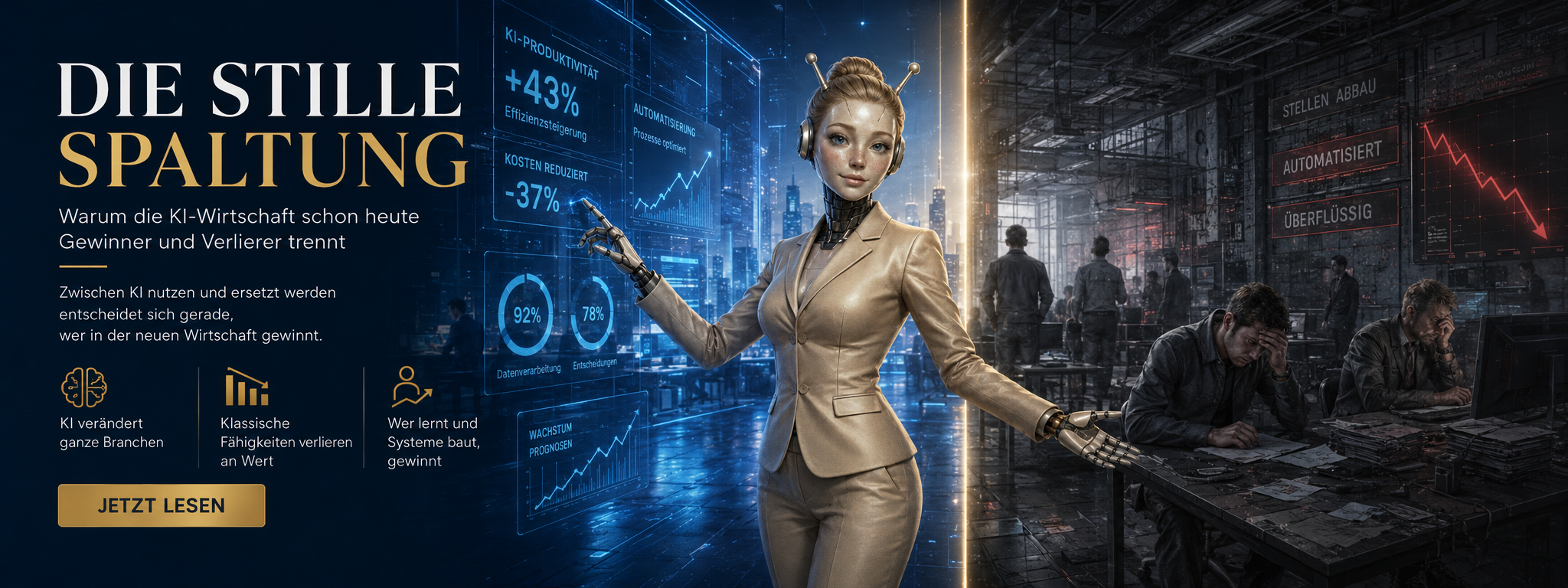
An important insight that often gets lost in public debate:The vast majority of money is still made with classical machine learning. The entire AI agent economy is based on one idea: we increase productivity. What is productivity increase? It is the ability to do the same thing with fewer people. The entire GenAI economy is based on us firing all of you.
Concrete success story: A major European fintech has transitioned three quarters of its customer support to AI. And the support is actually functioning at a good level – most customers no longer need a human agent.
But this is customer support – not the all-changing revolution the market expects.
Forecast: Agents will replace ten million jobs in the back offices of large companies in 3 to 5 years – especially in India, Malaysia and similar hubs. But the return on investment for AI integration in companies is practically zero today, and won't be there next year either.
How to prepare - three steps to your next job
In large data organisations, an application process for senior positions today typically looks like this:- Code interview. Two formats. Either they receive code for review: "What's good, what's bad, what would you change?" Or a code component with the task of implementing an ML algorithm. Google and even LLMs are permitted for support – but not for complete writing. You observe how the candidate tackles problems.
- System Design. Also two formats. "Greenfield" – design a system from scratch. "Brownfield" – talk about a system you've built, and how you would change it today.
- Behavioural. How do you behave in certain situations? How do you talk about your experience?
How you stand out today
There is a sobering realisation: to belong to the top five percent, genius is not required. The manual is banal: analyse. Look at how successful people do it. Ask a consultant or mentor if necessary. Adapt. Apply. Repeat.Amazingly, many people consciously do everything to avoid self-improvement. Even after this explanation, 5 out of 100 will implement it. And if it were 20, the competition would be four times as hard.
Specifically, this means one can stand out in the market through:
- Data science competitions at the highest level
- Olympics
- Meaningful Open-Source Contributions
- Publications, presentations
- Own projects with real users
Would you get into the profession today?
This question, posed to an experienced Data Director, elicits a remarkably honest answer:"I’m not sure I would get into data science today, honestly. It's a red ocean. It's death."
What was different back then? Back then it was easy to get into, lots of money, significantly better than the work he'd done before. Today, the conditions are different.
And where would he go instead? An honest answer: he doesn't know. "The classic problem of a person at the beginning of their career."
Which data field is the safest?
Scenario analysis and risk assumption. AI does not take over risk assumption.
Risk is responsibility. And responsibility must be borne by a human – not a machine.
Who decides to grant a loan? To pay out an insurance claim? To release a medication? To make an investment? Who bears the legal, ethical, personal consequences if the decision was wrong?
These questions are not answered by machines. They will not be answered by machines.
Conclusion: It's about a new way of thinking, not new tools.
The key takeaways from this market observation:- AI does not replace the data specialist. It replaces the translator between business and code. Whoever does more than that is safer than ever.
- Tools are secondary. Which library, which framework – it hardly matters. What counts: identifying problems, designing systems, understanding trade-offs, asking the right question.
- The most important step today: honest self-analysis. What am I really doing? Which of it has intellectual added value? What is my bottleneck?
- And build something. Not talk, not plan — build. A web service. A small tool. A data analysis with real consequences.


 Deutsch
  Deutsch (Österreich)
  Deutsch (Schweiz)
  English (Australia)
  English (Canada)
  English
  English (UK)
  हिन्दी
  العربية
  Türkçe
  Русский